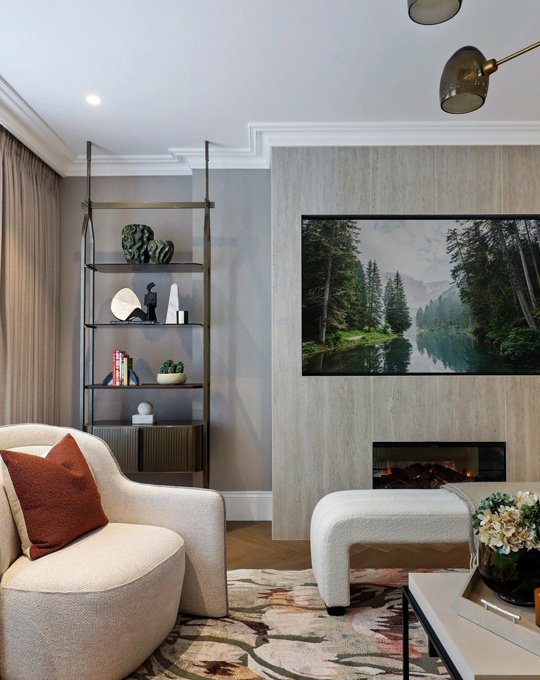
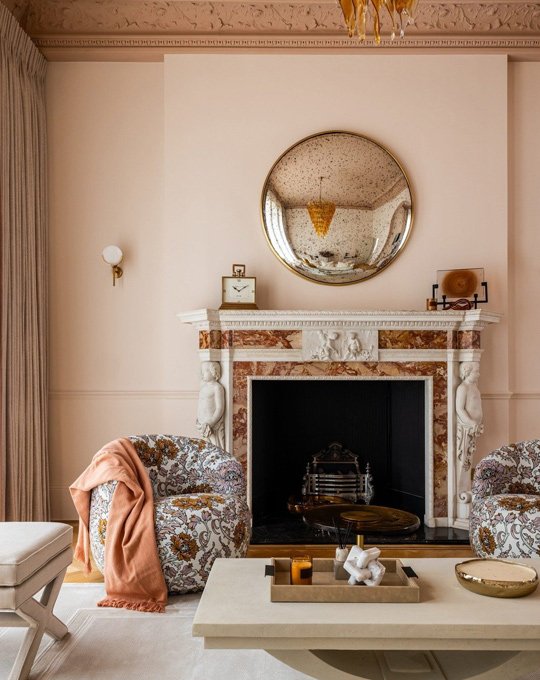
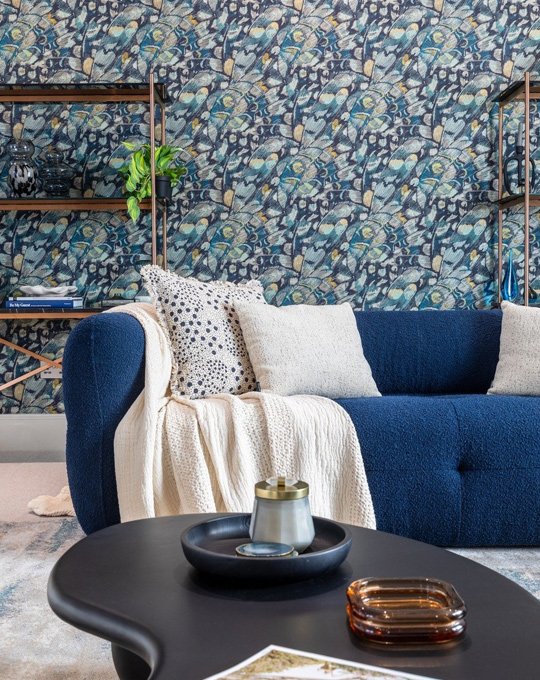
Lighting shapes the atmosphere of a home long before furniture, artwork, or decorative details are introduced. At Interiorise, lighting design is considered as part of the wider architectural and interior experience, influencing how spaces feel, function, and transition throughout the day. A well-lit home should feel calm and balanced, with each layer of light supporting the way the space is used.
Our lighting design services combine technical planning with a strong understanding of atmosphere and materiality. We work closely with architects, contractors, and electrical specialists from the early stages of a project, ensuring lighting layouts, control systems, and architectural details are carefully integrated into the wider design scheme. This early coordination allows the lighting to feel natural within the property rather than added as an afterthought.
Every home responds differently to light. Ceiling heights, natural daylight, materials, and room proportions all influence how lighting should be approached. We carefully layer ambient, task, and accent lighting to create depth and flexibility throughout the interior, ensuring spaces feel equally comfortable during the day and into the evening.
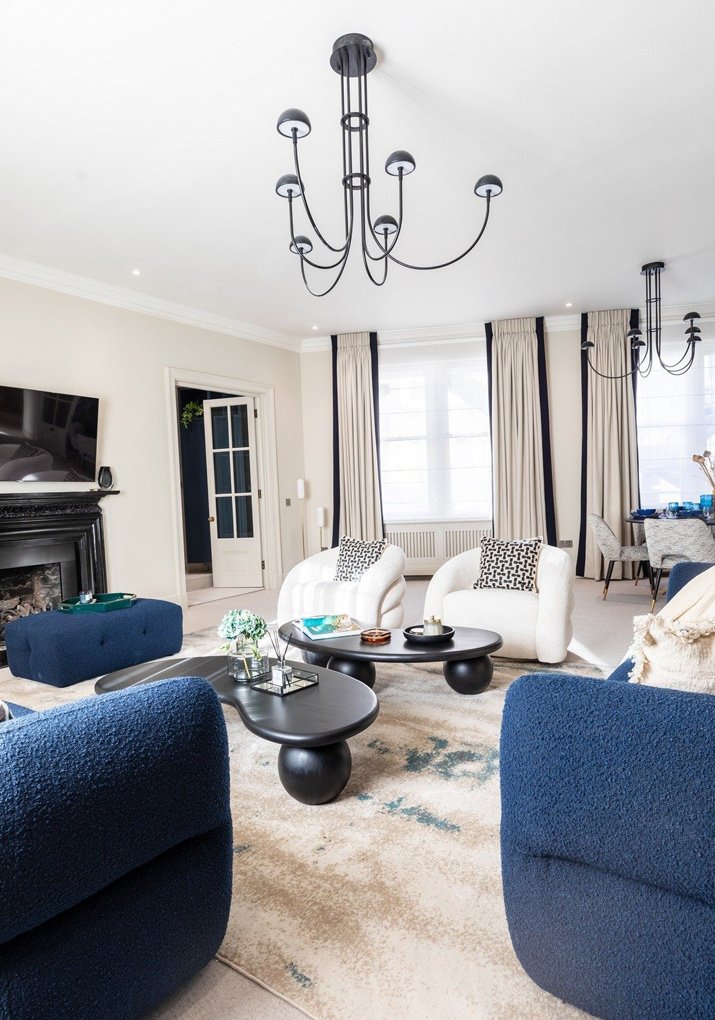
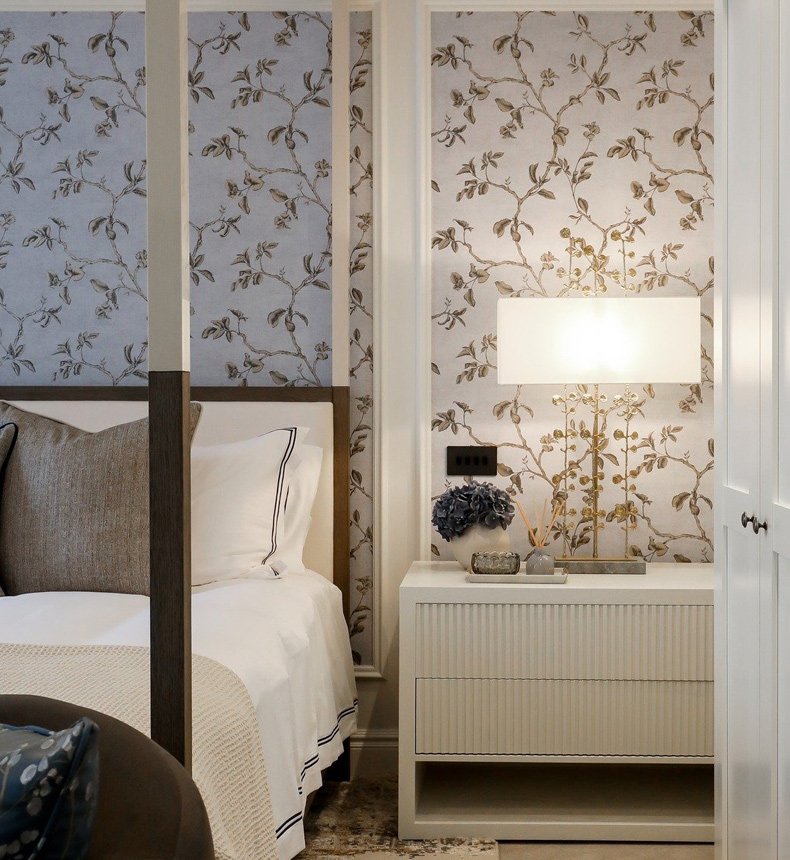
Light has a significant influence on how a space is experienced emotionally. The same room can feel calm and intimate in the evening, bright and energising during the day, or warm and welcoming when layered correctly. Thoughtful lighting helps shape these transitions naturally.
Beyond atmosphere, lighting also changes how materials and proportions are perceived within the home. Stone surfaces, timber finishes, textured fabrics, and architectural details all respond differently depending on the type, placement, and warmth of the light surrounding them.
Good lighting design rarely draws attention to itself directly. Instead, it creates a quiet sense of balance throughout the property, allowing rooms to feel comfortable, functional, and visually cohesive without appearing overlit or overly technical.
Many homes rely too heavily on ceiling downlights alone, which can leave spaces feeling flat, harsh, or lacking depth. In other properties, decorative fittings are selected without considering how the room will actually function throughout the day.
Poorly positioned switches, inconsistent colour temperatures, insufficient task lighting, and dark circulation areas are also common issues, particularly in renovation projects where lighting has evolved gradually over time. These details often affect how comfortable or welcoming a space feels without homeowners immediately understanding why.
Our role is to create lighting schemes that feel balanced and intuitive. Rather than overwhelming the property with excessive fittings, we focus on layering light carefully so each room feels calm, functional, and appropriate to the way the space is used.
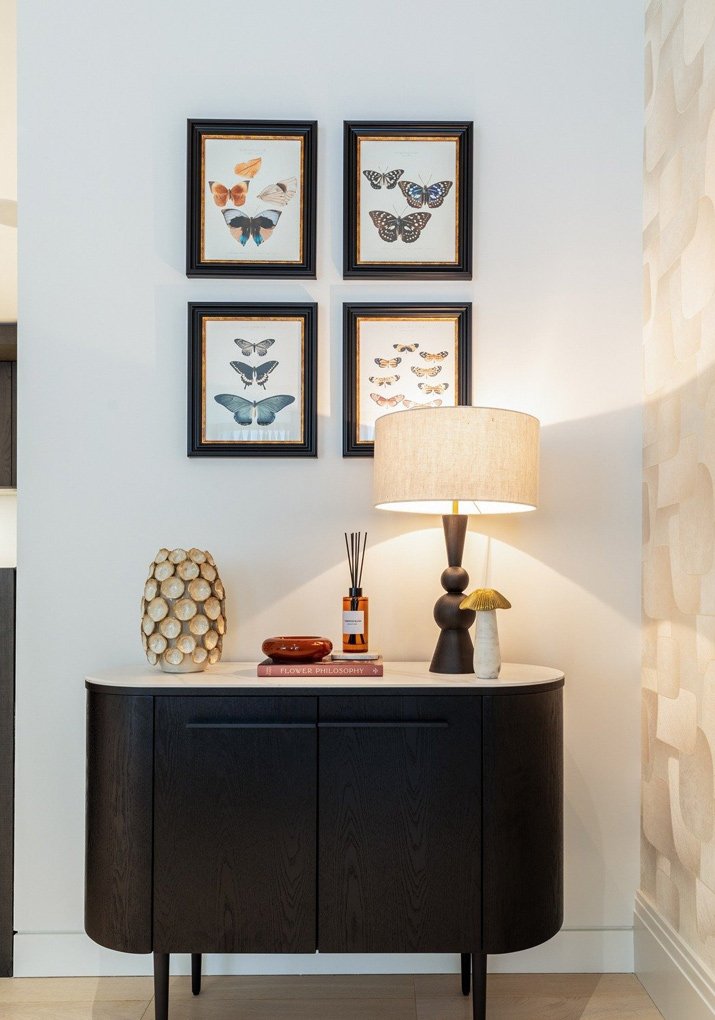
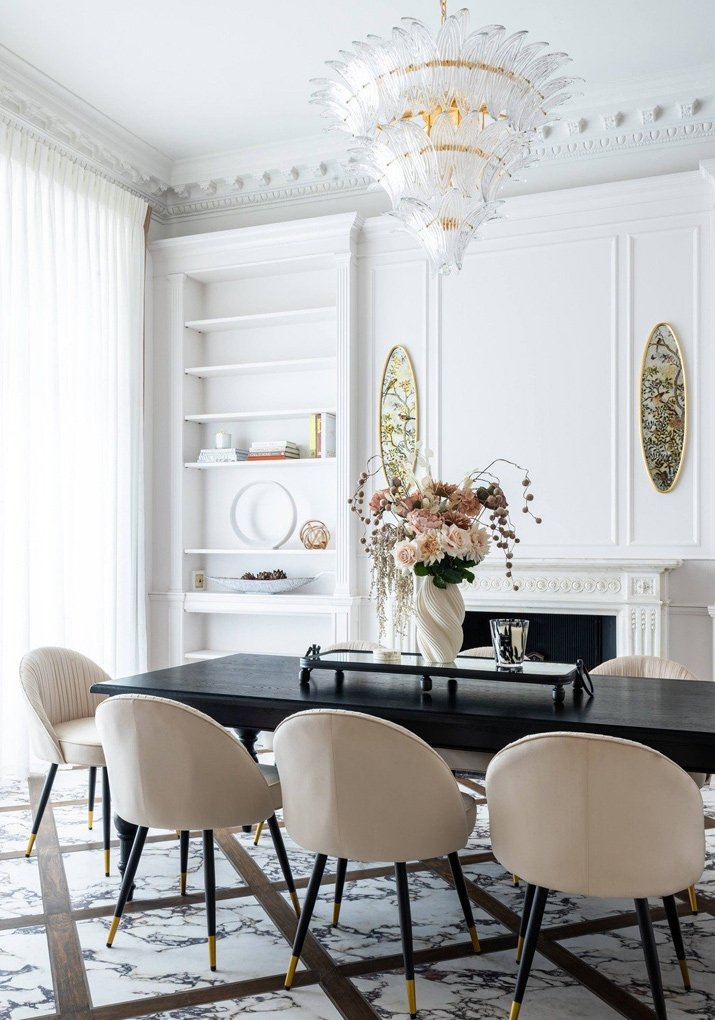
Lighting works most successfully when considered alongside the wider interior scheme rather than separately. Furniture layouts, material palettes, architectural detailing, and natural light levels all influence how a lighting scheme should be developed.
We carefully consider how illumination interacts with textures, surfaces, and proportions throughout the home. Soft wall lighting may introduce warmth to textured plaster finishes, while concealed architectural lighting can quietly highlight bespoke joinery or create depth within darker spaces.
By layering ambient, task, accent, and decorative lighting together, we create interiors that feel adaptable throughout the day. The result is a home that feels equally comfortable during bright mornings, relaxed evenings, and quieter transitional moments in between.
“Rhahat listened to our ideas and incorporated them into the designs she presented to us. She was extremely efficient at sourcing materials and no request was ever too much, she goes above and beyond to make sure we are satisfied with the end product.”
As Founder and Creative Director of INTERIORISE, Rhahat approaches lighting design through both atmosphere and practicality. Her understanding of layering, texture, and proportion informs how light is introduced into a space, while her project management background ensures technical coordination is handled carefully throughout the process.
Rather than treating lighting as a purely technical exercise, Rhahat considers how the home should feel during different moments of the day. From softer evening lighting in living spaces to more functional illumination within kitchens and bathrooms, each scheme is shaped around the experience of living within the property.
Working as a boutique studio also means clients collaborate directly with the founder throughout the design process. This creates a more personal approach where lighting decisions remain closely connected to the wider architectural and interior vision for the home.

The atmosphere of a home is often shaped by the quality of its lighting. Thoughtful lighting design creates depth, warmth, and balance throughout a property, allowing spaces to feel more comfortable and connected at every time of day.
rhahat@interiorise.co.uk
07866 627374
Lighting design typically includes lighting layouts, fixture specifications, control planning, colour temperature guidance, and coordination with architects or electrical contractors. The aim is to create a balanced scheme that supports both atmosphere and functionality throughout the home. This often involves considering how each room will be used at different times of day and ensuring the lighting responds naturally to those changing needs.
Ideally, lighting design should be planned during the early stages of a renovation before electrical work begins. This allows layouts, wiring, switching locations, and architectural details to be integrated properly into the wider design scheme. Early planning also helps avoid unnecessary revisions later in the construction process.
Yes. Thoughtful lighting can make smaller spaces feel brighter, more open, and more balanced. Carefully positioned lighting also helps improve depth and soften transitions between different areas of the home. In many cases, lighting can significantly influence how spacious a room feels without requiring structural changes.
Decorative lighting refers to visible fittings such as pendants, wall lights, and table lamps that contribute to the visual character of a room. Architectural lighting is more integrated into the structure of the property, including recessed lighting, concealed LEDs, and joinery lighting designed to shape atmosphere more subtly.
Always. Natural light levels, window positioning, and how daylight moves through the property are all considered when developing a lighting scheme. Artificial lighting should complement the architecture and natural rhythm of the home rather than compete with it.
Lighting design usually involves close coordination with electricians, architects, and contractors to ensure wiring, switch locations, ceiling details, and fittings are integrated correctly during construction. Early collaboration helps avoid compromises later in the project.
Yes. We can specify decorative fittings, architectural lighting details, and integrated lighting solutions as part of the wider design scheme, ensuring they complement both the property and the intended atmosphere of each space.
Thoughtful lighting often plays a major role in how refined and comfortable a home feels. Layered lighting, carefully considered detailing, and balanced illumination help create interiors that feel calmer, warmer, and more visually sophisticated.